We Search for Keywords
捉字室
A: "If you were to sum up your impression of learning in visual arts in three keywords, what would they be?"
B: "Creative, audacious, and imaginative."
A: "And for history?"
B: "The same three. History thrives on audacious thinking and boundless imagination, allowing us to revisit and reinterpret our discoveries, and to study the past creatively."
This dialogue between two educators—one from visual arts, one from history—took place at the conclusion of an educational programme. While the reflection reveals distinct differences between the two subjects, it also highlights overlooked commonalities: shared thinking processes and interpretative approaches that conventional subject-based learning in Hong Kong often obscures.
From 2015 to 2016, our organisation explored these common threads through a non-profit learning programme that integrated local history with visual arts education.
Programme Details
We Search for Keywords is a non-profit visual arts learning programme funded by The Robert H.N. Ho Family Foundation's Arts: Transforming Hong Kong initiative. It encourages young people to explore the past while creating new meaning for the present. Using three keywords— Landscape, Name, and Map—that defined the topology of Kai Tak, students developed fresh insights and deeper connections with their neighbourhood through creative practices: ceramic making, photo styling, and information mapping. The programme sparked diverse conversations about local history, toponym, and urban development.
As lead director, I oversaw the programme from conception through delivery, including an outdoor historical scavenger hunt, workshops, commissioned artist-educator works, and a final exhibition. The year-long initiative engaged over 80 students and visual arts teachers from three secondary schools, delivering six themed workshops across 64 sessions.
We Search for Keywords Learning Programme: Team Credits in Publication

Image Description from left to right: Students participated in an outdoor scavenger hunt: reviewing the game booklet, documenting textured monument details, and collaboratively stacking blocks in a Jenga game.


Image Description from left to right: Part of the outdoor scavenger hunt: Students document neighbourhood details, including uncanny street signs, and create collaborative artwork during photo styling to reinterpret and celebrate street names.


Image Description from left to right: Workshop exploring Name: A student performing in a styled photo shoot with dramatic lighting; an artist-educator facilitating students against a green screen; and the final artwork featuring students performing as superhero 'Green Arrow' (六俠街) with visual effects.

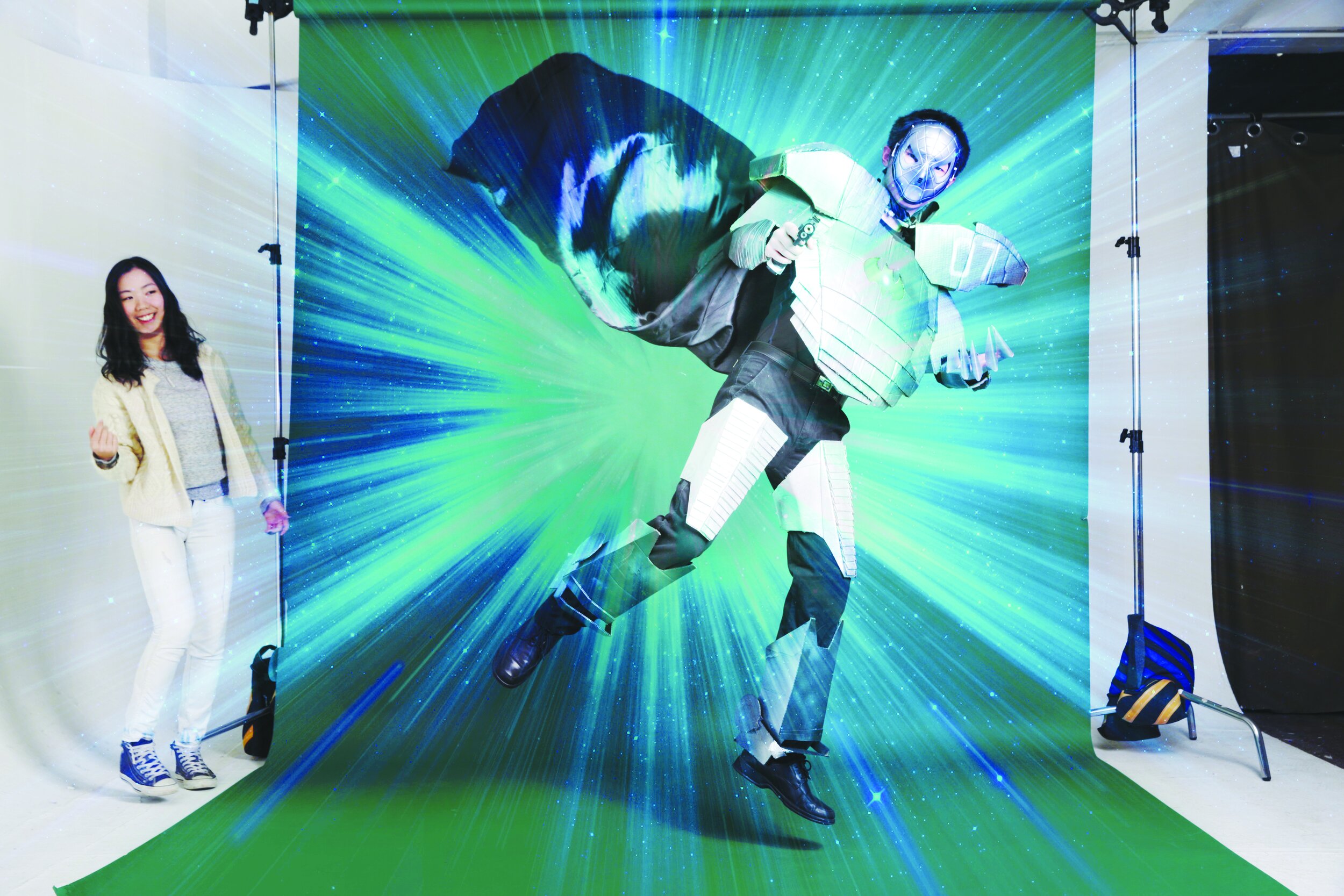

Image Description from left to right: Workshops exploring Landscape and Map: Students participate in a ceramic-making session with an artist-educator. A crumbled ceramic artwork inspired by the historical offering ceremony at “The Pavilion for Revering Written Words” (惜字亭) in Kowloon Walled City. Students laugh as an educator presents their map icons.


Image Description from left to right: Final exhibition: Exhibition displays featuring the learning programme poster; students and visitors examining artworks on display attentively; and artist-educators, a guest moderator, a historian, and community members gathered outdoors, sharing reflections on the completed project


Research and Publication
During this process, in-class observations and qualitative interviews on selective students were done as part of this pilot study. The learning experience and outcomes of young people were being documented in an online and printed publication. This publication attempted to trace different learning trajectories through six case studies and with brief analysis of the results by applying the framework of Generic Learning Outcomes (GLO) as devised by Professor Eilean Hooper Greenhill. By sharing this publication freely among school teachers, art/design educators and local historians, we hope to prompt questions and shed new light in alternative pedagogical interventions for young people in Hong Kong.
Publication on Issuu:
Visual arts learning programme: a collection of case studies, 2015-2016
「捉字室」視藝教育計劃案例結集 2015-2016

Image Description from left to right: The printed publication featuring a red, orange, yellow, and blue cover frame with the programme title; interior pages displaying text, photographs, and case studies; and a student presenting her experimentation with ceramic clay.


Image Description from left to right: Landscape workshop: Artist-educator facilitating a student on ceramic casting; Map workshop: student presenting a detailed ‘information mapping’ in yellow and green, layering buildings, aircraft, chaotic signage and Lion Rock to visualise Kai Tak’s multiple temporalities in a single composition.


Video Description: a documentation video of the learning programme ‘We Search for Keywords’ — from the historical outdoor scavenger hunt; snapshots of individual workshops to the final exhibition sharing.
Photo credit: Max Kong and Otto Leung
Documentation video credit: Mandy Lee